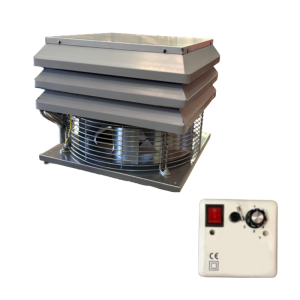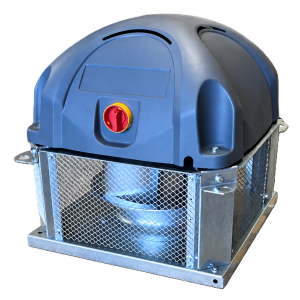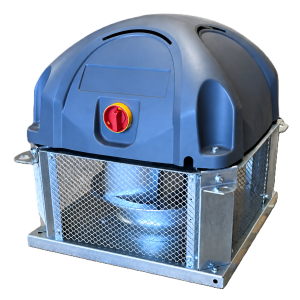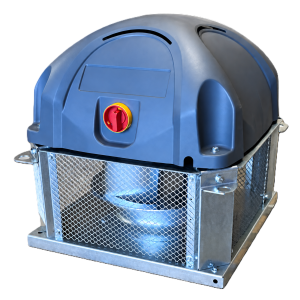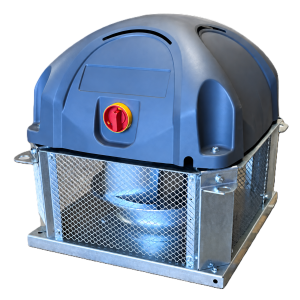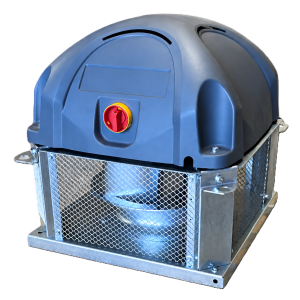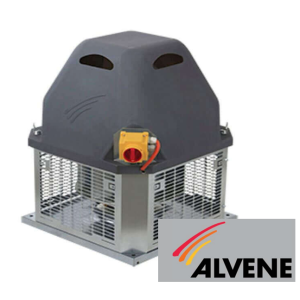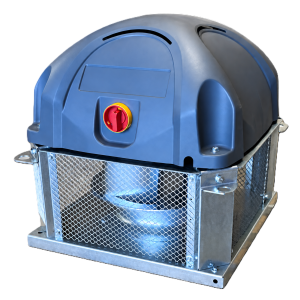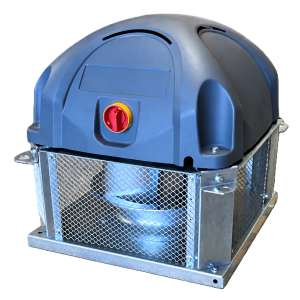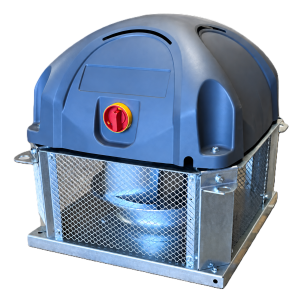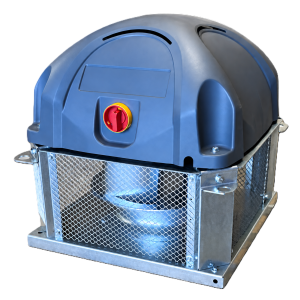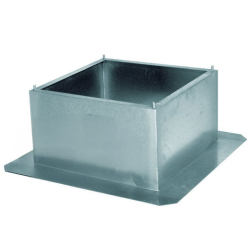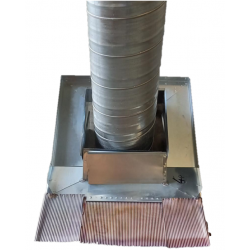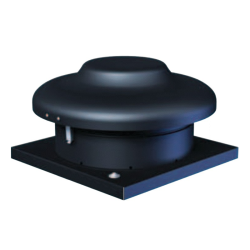
Roof fan T11 exhaust fan - 1,100 m³/h - 220 V
Roof fan T25 exhaust fan - 2,500 m³/h - 230 V + variable-speed drive - Wood-burning...
Roof fan T32 exhaust fan - 2,000 m³/h - 230 V - 400°/2h
Roof fan T32 TRI extraction system, 2,000 m³/h, 400°/2h
Roof fan Exhaust fan T36 - 2,750 m³/h - 230 V - 400°/2h
Roof fan T36 exhaust fan - 2,750 m³/h - TRI - 400°/2h
Roof fan T40 exhaust fan - 4,200 m³/h - 230 V - 400°/2h
Roof fan T40 exhaust fan - 4,200 m³/h - TRI - 400°/2h
Roof fan Exhaust fan T45 - 5,200 m³/h - 230 V - 400°/2h
Roof fan ALVENE EMMOS45 Roof Unit - 5,400 m³/h - 220 V - F400
Roof fan T45 extraction fan - 5,200 m³/h - TRI - 400°/2h
Roof fan T50 exhaust fan - 7,500 m³/h - TRI - 400°/2h
Roof fan T63 6T extraction system - 10,000 m³/h - TRI - 400°/2h
Roof fan T63 4T extraction system - 14,000 m³/h - TRI - 400°/2h
Roof fan T71 6T extraction system - 14,000 m³/h - TRI - 400°/2h
Roof fan T71 4T exhaust system - 22,000 m³/h - TRI - 400°/2h
Frequently asked questions
What is the difference between a roof extract fan and an extraction fan box?
A roof extract fan is fitted on the roof or on a wall and discharges air directly outside. An extraction fan box locates the motor outside the kitchen but without a roof outlet, useful when there is no roof access available. The choice depends mainly on your building layout and the space available for the motor.
Single-phase 230V or three-phase 400V roof fan, which should I choose?
In our range, single-phase 230V covers airflows up to around 5,200 m³/h (T45 series). Beyond that, particularly from 7,500 m³/h upwards, models are offered in three-phase 400V. The choice also depends on the power supply actually available on your site: check this before ordering.
What is the F400/120 smoke extraction standard on a roof extract fan?
The F400/120 standard denotes resistance to 400°C for 120 minutes, relevant for installations subject to smoke extraction regulations. It is not interchangeable with other fire resistance classifications. Always check with your consultant or installer which exact standard is required for your project before choosing your model.
Is a standard roof fan suitable for wood fired cooking?
Not necessarily. In our range, the T25 roof fan (2,500 m³/h, 230V) is specifically stated as compatible with wood fired cooking and supplied with a speed controller. For this type of cooking, it is best to choose a dedicated model rather than a standard roof fan, as the residues and temperatures generated differ from standard cooking.
What impact do duct diameter and elbows have on actual airflow?
The airflow stated on a roof fan corresponds to free airflow, measured without any ductwork constraints. In the actual installation, the length of the ductwork, its diameter and the number of elbows create pressure losses that reduce this airflow. You should never size based solely on the maximum airflow of the product, but take the whole extraction system into account.
How can odours be reduced with a roof fan?
Regular maintenance of your installation is essential to limit odour nuisance (a legal requirement, at least once a year). To further reduce odours, installing vertical deflectors is strongly recommended. As well as reducing noise nuisance, they allow smoke and odours to be discharged higher and further, helping them disperse in the air and limiting their impact on neighbours.