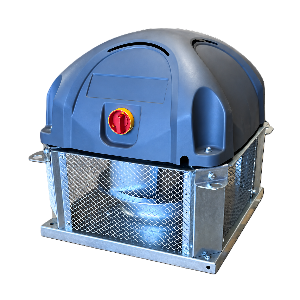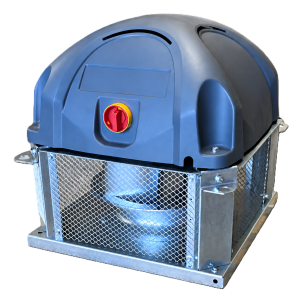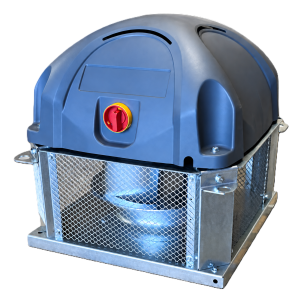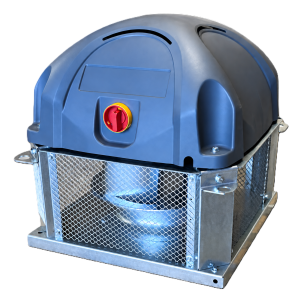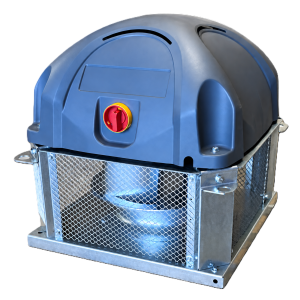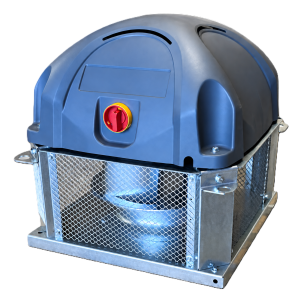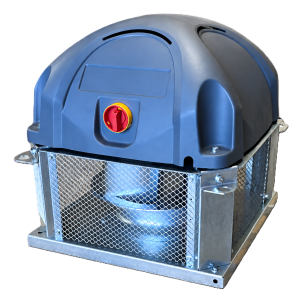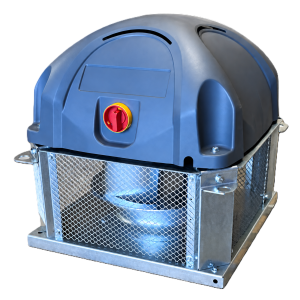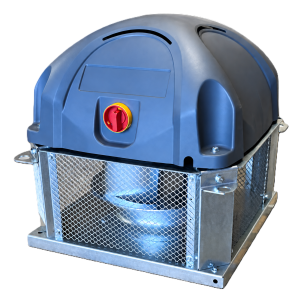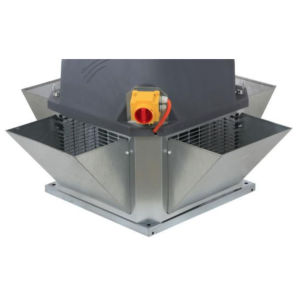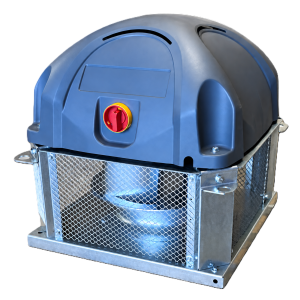
Roof fan T4048-TRI Exhaust Fan, 2-Speed, 2000–4200 m³/h
Roof fan T4548-TRI 2-Speed Exhaust Fan, 2600–5200 m³/h
Roof fan T50612-TRI exhaust fan, 2-speed, 2,500–5,000 m³/h
Roof fan T5048-TRI exhaust fan, 2-speed, 3,800–7,500 m³/h
Roof fan Exhaust fan T5648-TRI, 2-speed, 4,600–11,000 m³/h
Roof fan T5056-TRI 2-speed exhaust fan, 3,500–7,000 m³/h
Roof fan Exhaust fan T71612 - TRI 2-speed 7,500/14,500 m³/h 400°/2h
Roof fan T80612-TRI Exhaust Fan, 2 Speeds, 12,000/24,000 m³/h, 400°/2h
Roof fan T5646-TRI exhaust fan, 2-speed, 7,000–11,000 m³/h
Roof fan T7148 Exhaust Fan - 2-Speed TRI 1,100/21,000 m³/h 400°/2h
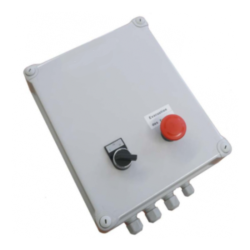
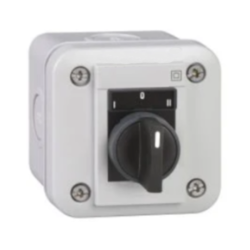
2-Speed Starter + Smoke Exhaust Button
Frequently asked questions
Is a 2-speed roof fan suitable for a first installation?
It depends on the use. For professional mechanical ventilation or smoke extraction, these 2-speed roof fans suit both first installations and replacements. In commercial kitchens, however, they are reserved for like-for-like replacement of an existing 2-speed roof fan. For a new kitchen, ask our technical team for advice to size the right equipment.
What is the difference between a 2-speed roof fan and a roof fan with a frequency inverter?
The 2-speed roof fan offers two fixed settings, low and high speed, controlled by a starter and a simple switch. The roof fan with a frequency inverter allows progressive airflow adjustment across the whole range. Two speeds are often enough when activity alternates between quiet periods and service rush, without needing fine intermediate adjustment.
Why are two airflow figures given for each roof fan, for example 2,000 to 4,200 m³/h?
These two figures correspond to the motor's two speeds: the lower figure for reduced operation outside of service, the higher figure for busy periods or reinforced extraction. You switch between speeds using the associated button or 2-speed starter.
Which 2-speed roof fan model should I choose based on the required airflow?
This depends on the airflow required by your system. Our range runs from the T4048-TRI (2,000 to 4,200 m³/h) for the more modest airflows, to the T80612-TRI (12,000 to 24,000 m³/h) for large installations, with several intermediate steps in between. Actual airflow also depends on the length of the ductwork and the number of elbows, which should be taken into account before deciding.
Are all the roof fans in this range three-phase?
Yes, all models in this category run on 380V three-phase power. Check that your site has a three-phase supply available before ordering, especially if you are replacing an old single-phase motor.