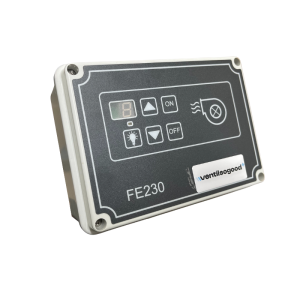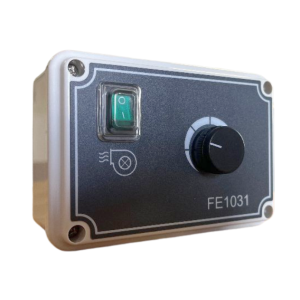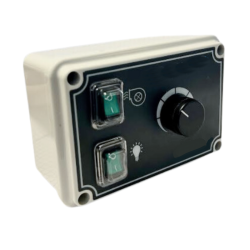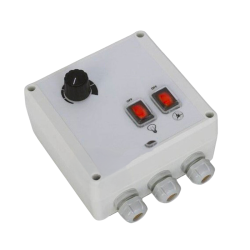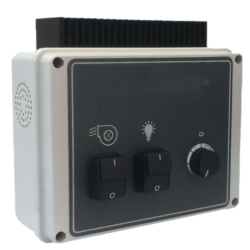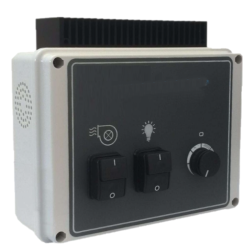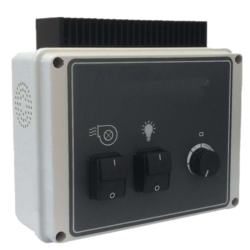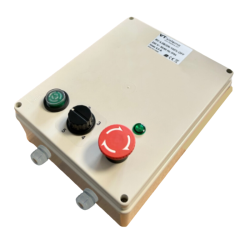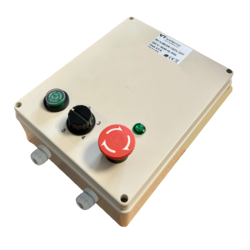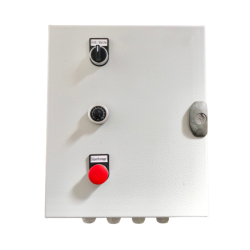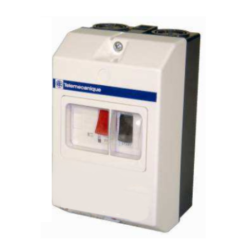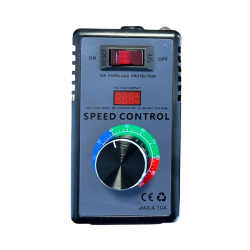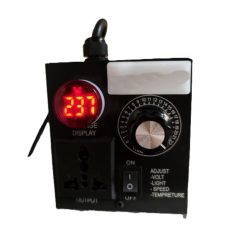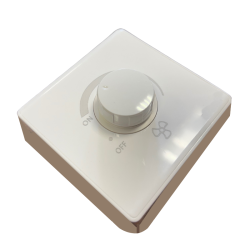
Our 230V single-phase speed controllers adjust the speed of a commercial kitchen hood motor, extraction fan box or roof extract fan compatible with speed variation. The range covers currents from 1.5A to 11A, with models from Ventilsogood, Fasar and SAFTAIR brands, as well as autotransformers for smoke extraction.

Frequently asked questions

What is the difference between a voltage controller and an autotransformer for a commercial kitchen hood?

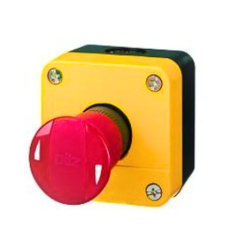
The voltage controller adjusts the motor speed by modulating the supply voltage; it is the most common solution for single-phase double-inlet centrifugal fan motors. The autotransformer, available in our range in 7A and 11A, offers 4 fixed positions and can include a smoke extraction emergency push button compliant with the C4 standard, useful on installations subject to this requirement.

Which controller current rating should I choose for my hood motor?

The controller's current rating must always be equal to or higher than the maximum current shown on your motor's nameplate. Our range covers 1.5A for small motors or T11 roof fans, then 3A, 4.5A, 5A, 7A, 8A, 10A and 11A for double-inlet centrifugal fan motors of increasing sizes (7/7, 7/9, 8/9, 9/9, 10/10, 12/12).

Is a 230V controller suitable for a 380V three-phase motor?

No, the controllers in this category are designed for a 230V single-phase supply. If your motor runs on 380V three-phase, you need a dedicated three-phase speed controller. Our range does, however, include a single-phase to three-phase converter at 1.5kW for cases where only a single-phase supply is available.

When do you need a controller with a smoke extraction emergency push button?

Two models in our range, at 7A and 11A, include a 400°C smoke extraction emergency push button compliant with the C4 standard (400°C, 30 minutes). This standard should not be confused with an F400/120 rating (400°C, 120 minutes): check the exact requirement of your public-access building or open kitchen regulations before choosing the appropriate model.

Why does my motor stop after 10 to 15 minutes with a controller?

This kind of stoppage usually points to the motor's thermal protection tripping. Before suspecting the controller, check for overpressure in the ductwork, the condition of the duct, the fresh air inlet and the power supply: a controller cannot on its own cause this type of stoppage (unless wired incorrectly).

My motor whistles and/or runs irregularly at low speed, what should I do?

Some newer motors cannot tolerate running at too low a speed and will start whistling or running irregularly in that case. This is not a fault, but prolonged running at low speed will wear the motor out over time. In this case, either raise the controller's minimum speed setting if it has that option, or avoid running it at low speed. Generally speaking, the closer a motor runs to its maximum, the longer it will last.