Shopping Cart
In stock
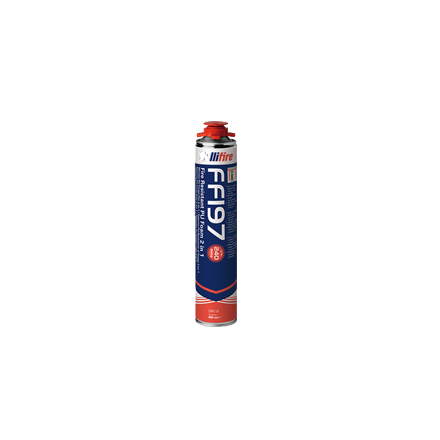
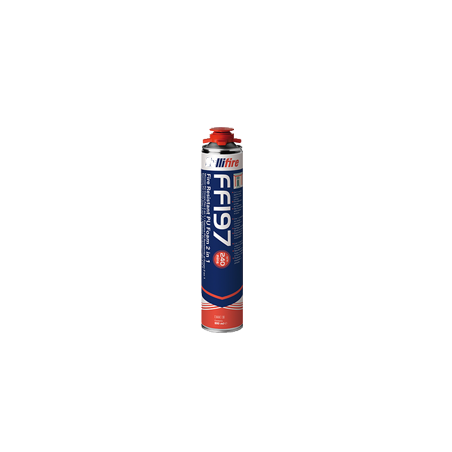
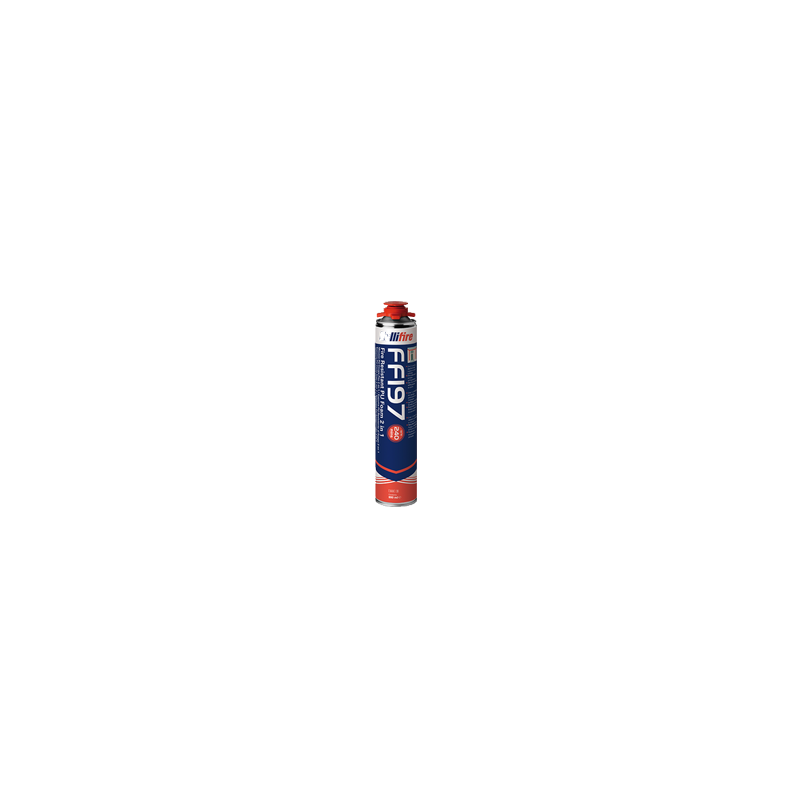
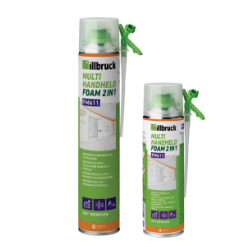
The fire-resistant expanding foam seals wall penetrations and duct connections on your mechanical ventilation system, with a fire resistance of 2 hours to F400/120 standard. Quick and practical to apply thanks to its 2-in-1 system.
 Fast delivery
 Advisers 5 days a week
 Payment in 3 or 4 instalments
The fire-resistant expanding foam is a single-component polyurethane foam designed to seal wall and floor penetrations and connections on a mechanical ventilation system or extraction hood ductwork, with a fire resistance of 2 hours to F400/120 standard.
Wherever a duct passes through a wall, a fire-rated floor, or where a fan box is fixed against a partition, that penetration point remains a weak spot unless it's properly sealed. This foam fills the gap around the duct and seals the opening airtight, while maintaining its stated fire resistance. It expands and cures on contact with moisture in the air and in the substrate, allowing it to adapt to irregularities in walls, partitions or service openings.
| Specification | Value |
|---|---|
| Type | Single-component polyurethane foam |
| Fire resistance | 2 hours, F400/120 standard |
| Application method | Straw nozzle (manual) or gun, 2-in-1 system |
| Capacity | 750 ml cartridge |
| Package weight | 1 kg |
| Manufacture | Made in Europe |
| Warranty | 1 year |
The cartridge can be used by hand, with the supplied straw nozzle for small touch-ups, or with a gun for a more even bead on a longer penetration. The 2-in-1 system means you don't need to invest in a dedicated gun if you don't use one regularly. Once cured, the foam can be finished with plaster or acrylic paint if the location remains visible.
Please note: this fire-resistant foam expands less than a standard expanding foam. If you only need insulation or gap filling without fire resistance requirements, the insulating expanding foam offers better fill yield.
Product Details
You might also like
Commercial Rang Hood Installation Kit: Cabinet—Threaded rods and hardware
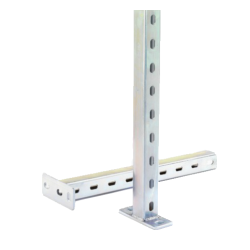
Perforated galvanized steel bracket
Customers who bought this product also bought:
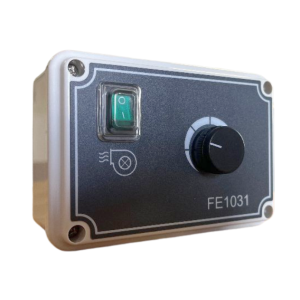
Electronic variable speed drive ECO for Professional Restaurant Range Hoods
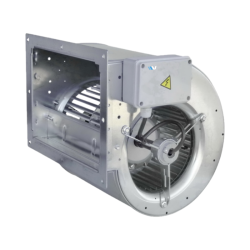
Centrifugal Fan DDM9/9 - 3,600 m³/h, 220 V, Nicotra Regal
It depends on the regulations applicable to your premises (public-access building, plant room, separation between dwellings). The fire-resistant expanding foam offers 2 hours fire resistance to F400/120 standard, but it's up to you or your building control body to confirm the exact requirement for your site before using it as a contractual solution.
No. This fire-resistant foam is designed to seal wall penetrations and connections on a ventilation system, not to seal electrical cable penetrations. That application requires a specific intumescent foam, different from this product.
The cartridge features a 2-in-1 system: you can use it by hand with the supplied straw nozzle for a one-off touch-up, or with a gun for a longer, more even bead. It cures on contact with moisture in the air and the substrate.
The fire-resistant expanding foam is formulated to hold its 2-hour fire resistance (F400/120), which makes it expand less than a standard foam. If you're only looking to insulate or fill a gap without fire resistance requirements, the insulating expanding foam offers better fill yield.
Yes, once cured, the fire-resistant foam can be finished with plaster or acrylic paint if the location remains visible after installation.