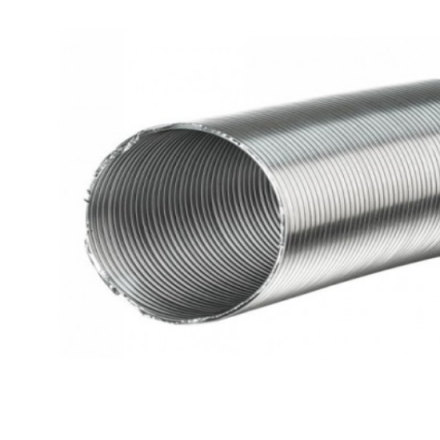
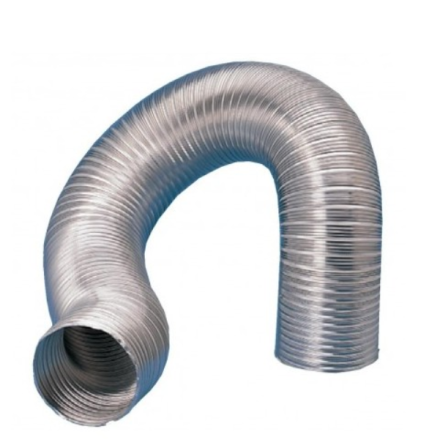
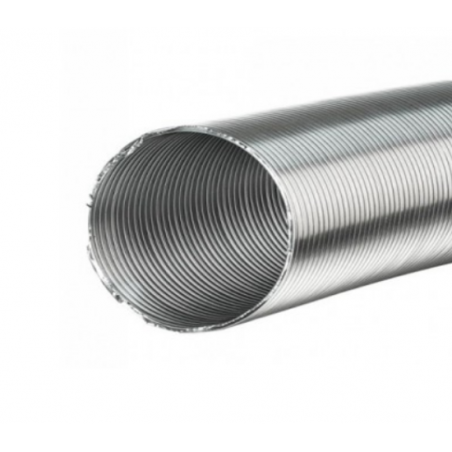
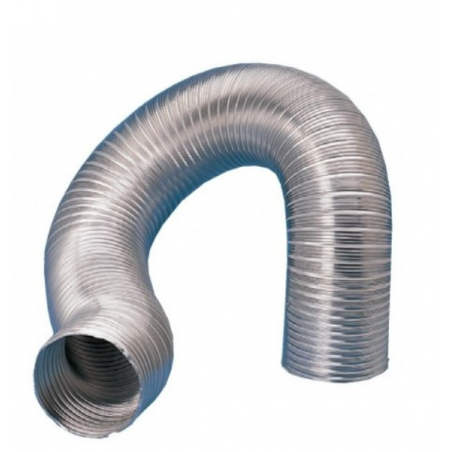
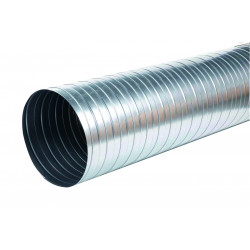
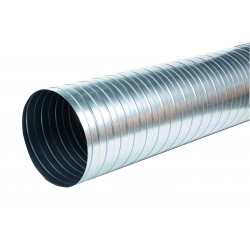
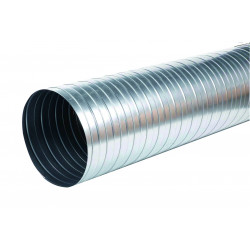
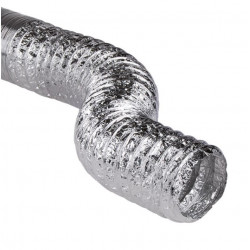
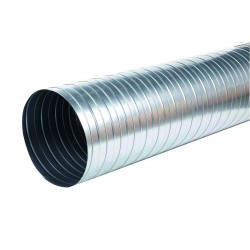
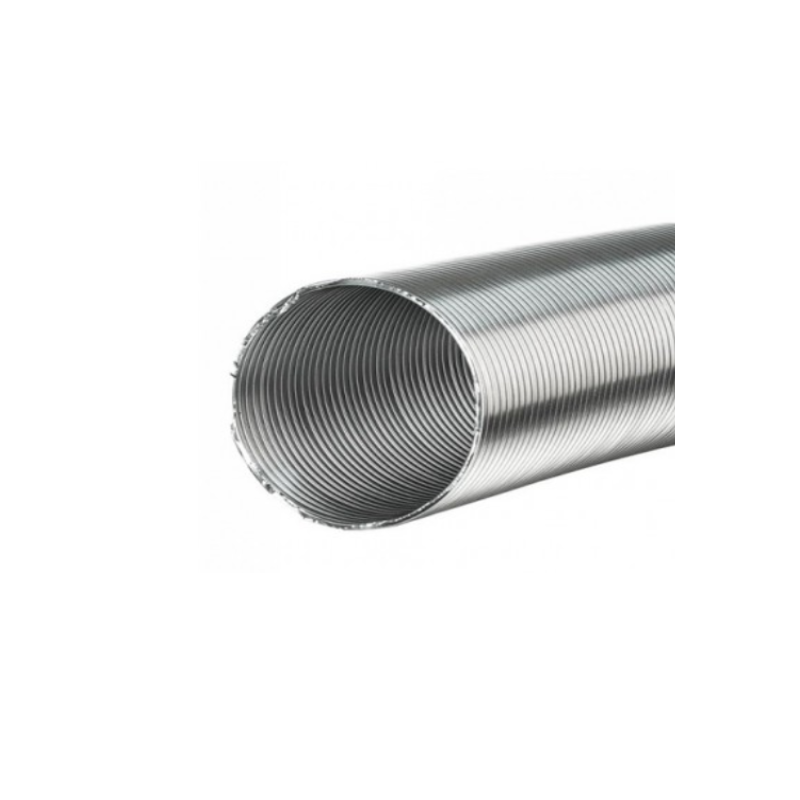
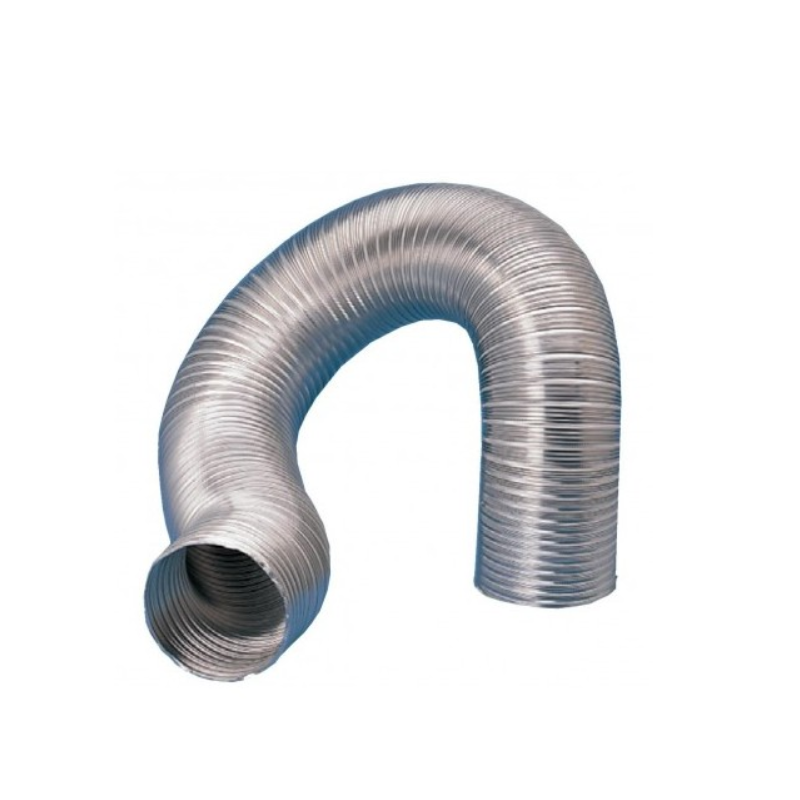
The 3-meter semi-flexible conduit is an aluminium duct that stretches, bends and threads through spaces where rigid ducting simply stops dead: suspended ceilings, tight corners, wall penetrations. It covers a diameter range from 80 to 500 mm.
Technical specifications
| Specification |
Value |
| Length |
3 metres (supplied compressed to 1 metre) |
| Available diameter |
80, 125, 160, 200, 250, 315, 355, 400, 450 or 500 mm |
| Material |
Aluminium |
| Operating temperature |
-30°C to +250°C |
| Fire rating |
A1 |
| Parcel weight |
3 kg |
Why choose a semi-flexible duct over a rigid duct?
Semi-rigid means it holds the shape it's given: once bent to route around an obstacle, it doesn't crush or sag over time, unlike the flexible ducting commonly found in DIY stores, whether in PVC or thin aluminium. The aluminium used here is thicker and reinforced, which gives it this stability. It keeps the advantage of flexible ducting (you can bend it by hand to get round an obstacle) while staying far more rigid than standard flexible ducting, which limits pressure losses in the system. It often removes the need for an extra elbow or fitting on an awkward run, simplifying installation and reducing the number of parts to order. It suits professional mechanical ventilation systems as well as kitchen extraction ducting, within its temperature limit of 250°C.
Installation and connection
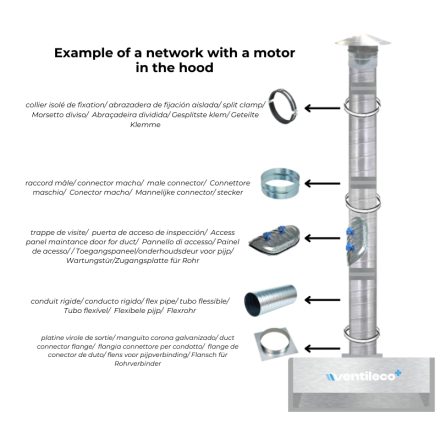
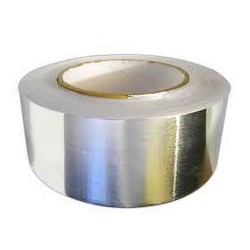
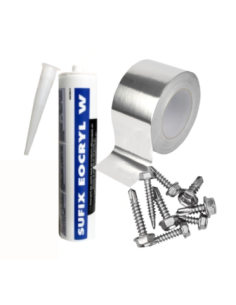
This duct is supplied compressed to 1 metre for transport: it must be pulled out fully to its 3-metre length before installation. Only pull out the length you actually need for your run: unnecessary excess deployed duct encourages grease to collect in the folds, particularly on a kitchen extraction system. It connects to standard spigots, fittings and ducting using clips or aluminium tape to seal the joints. Once in place, it should not be handled again: this is a fragile product once deployed, designed to be fitted and left as is, not repositioned over time.
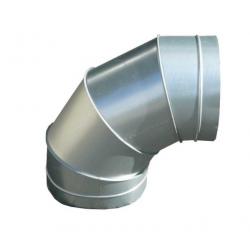
Take care with your measurements if you need a 90-degree bend with this type of duct: the flexibility comes at the cost of length used. On a 315 mm duct, for example, a 90-degree bend uses up around 1 metre of duct to advance the run by only 50 cm. Factor this in before ordering your length, or you may find yourself short once the duct is deployed on site.
Points to check before ordering
- The exact diameter of your existing ductwork or kitchen hood spigot, to select the correct reference from the ten diameters available.
- The actual length required once deployed: this duct is sold in 3-metre lengths (supplied compressed to 1 metre), to be trimmed or connected according to your run, without pulling out more than necessary.
- The number of 90-degree bends planned on the run: each uses around one metre of duct for 50 cm of actual progress, to be factored into your measurements.
- The expected operating temperature in the duct, to compare against the duct's -30°C to +250°C range.
- The space available for the run (suspended ceiling, corner, wall penetration) to confirm that semi-flexible ducting is the right choice rather than rigid ducting.
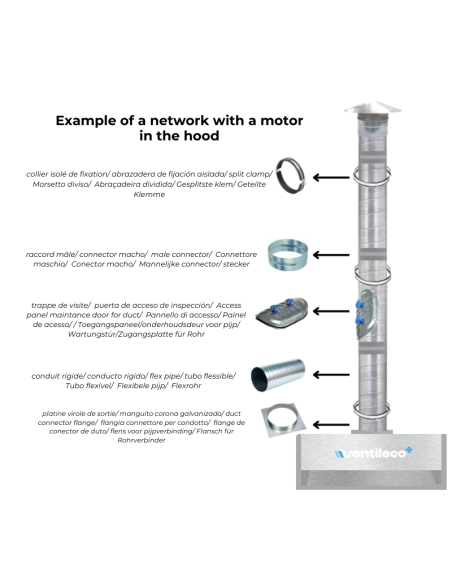
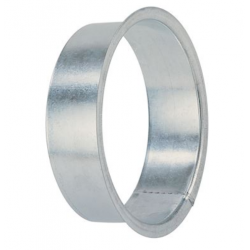
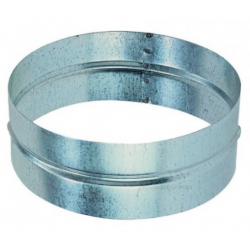
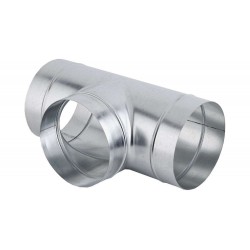
- The connection accessories required (fitting, spigot, aluminium tape) for an airtight installation.
Goes well with
Need a longer length or a rigid galvanised steel duct? Browse the full range in our ducting and galvanised duct category.