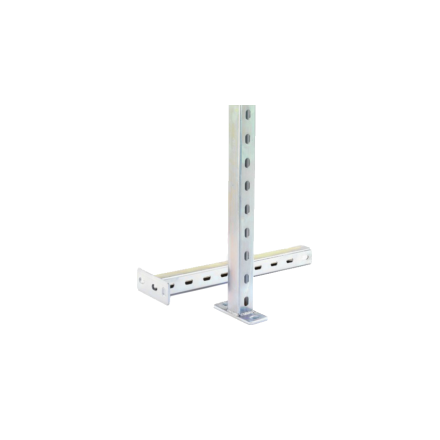
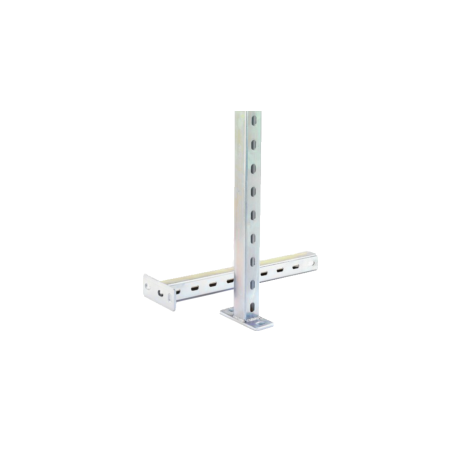
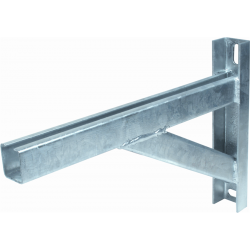
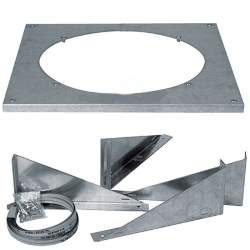
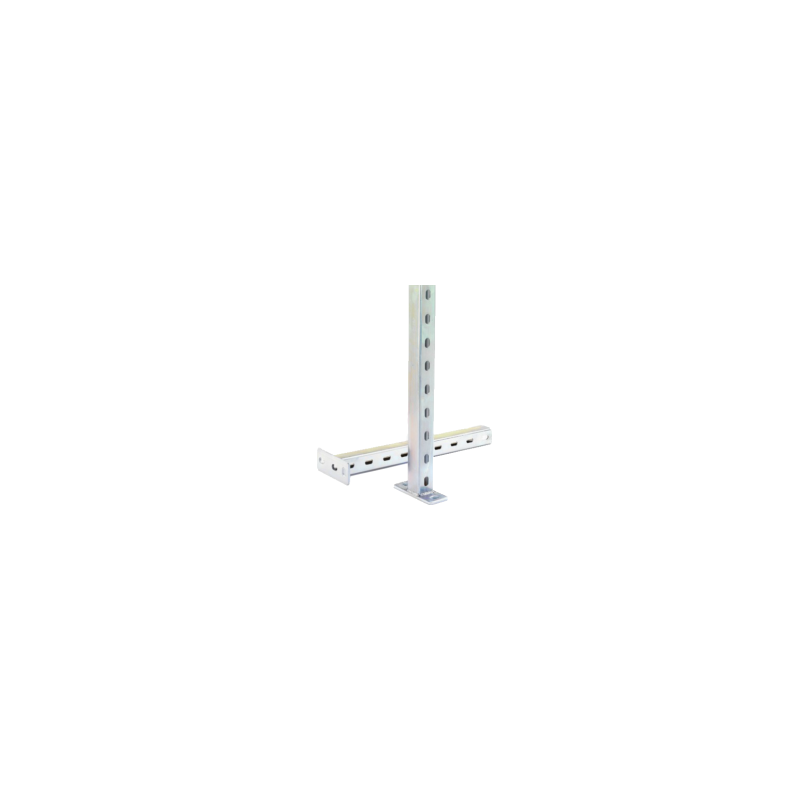
Perforated galvanized steel bracket: a T-shaped bracket for reinforced wall mounting
The perforated galvanized steel bracket is a 750 mm T-shaped metal bracket, designed to reinforce the wall mounting of extraction fan boxes, roof fans and professional ventilation motors. It fixes onto a strut channel to provide the stability needed for a reliable installation, whether at height or on a facade.
On site, it's often the part that gets overlooked until the day the bracket bends under the weight of the fan box. This T-bracket, combined with its strut channel, handles heavy loads without flexing and frees up floor or roof space by allowing your equipment to be mounted at height. Properly fixed onto a strut channel and in line with current fixing standards, it can support several hundred kilograms, distributed across several brackets if needed.
Technical specifications
| Specification |
Value |
| Size |
750 mm |
| Material |
Galvanized steel |
| Shape |
Perforated T-bracket |
| Packaging |
Sold individually |
| Weight |
2 kg |
| Warranty |
1 year |
Use and compatibility
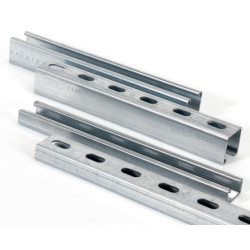
This galvanized T-bracket is used to support extraction fan boxes, roof fans or ventilation motors on a wall or roof surface. Made from a material resistant to corrosion and weathering, it is suitable for both indoor installation and outdoor use exposed to the elements. It must always be fixed onto our strut mounting channel, sold separately, to form a modular, reinforced support structure.
Installation and fitting
This bracket is almost never fixed directly onto a wall or partition: it is always screwed onto a strut channel, which is then fixed to the final support surface. Never fix this T-bracket directly onto a hollow partition such as plasterboard, a cold room panel or hollow brick without adding a strut channel in addition: these surfaces cannot support the weight of a fan box or roof fan on their own. When correctly combined with the strut channel and installed in line with good practice, this combination can support several hundred kilograms, which is reassuring on site when dealing with a sizeable fan box or roof fan. Once the channel and bracket structure is in place, the raised installation makes it easier to access the equipment for cleaning, inspection and maintenance, and helps keep the installation tidier, with no cables or supports left lying on the ground.
Points to check before ordering
- Check the total weight of the fan box, roof fan or motor to be supported: above a certain load, several evenly spaced brackets are needed rather than a single one.
- Check the nature of the final support surface (wall, facade, structural frame) to choose suitable fixings, not supplied with the bracket, and always plan for an intermediate strut channel.
- Make sure the 750 mm length matches the footprint of your equipment and the desired spacing between fixing points.
- For outdoor installation on a roof or facade, check the weather exposure of the chosen location.
- Always plan for the strut mounting channel in addition: this bracket is never installed on its own directly onto a wall or hollow partition, and it is this combination that allows several hundred kilograms to be supported in line with current fixing standards.
To use alongside